FIELD NOTES / ARCHITECTURE & PLACE
A home should know where it stands.
The most interesting room in a home may be the one between inside and out.
Original editorial draft · Client review pending · 3 minute read
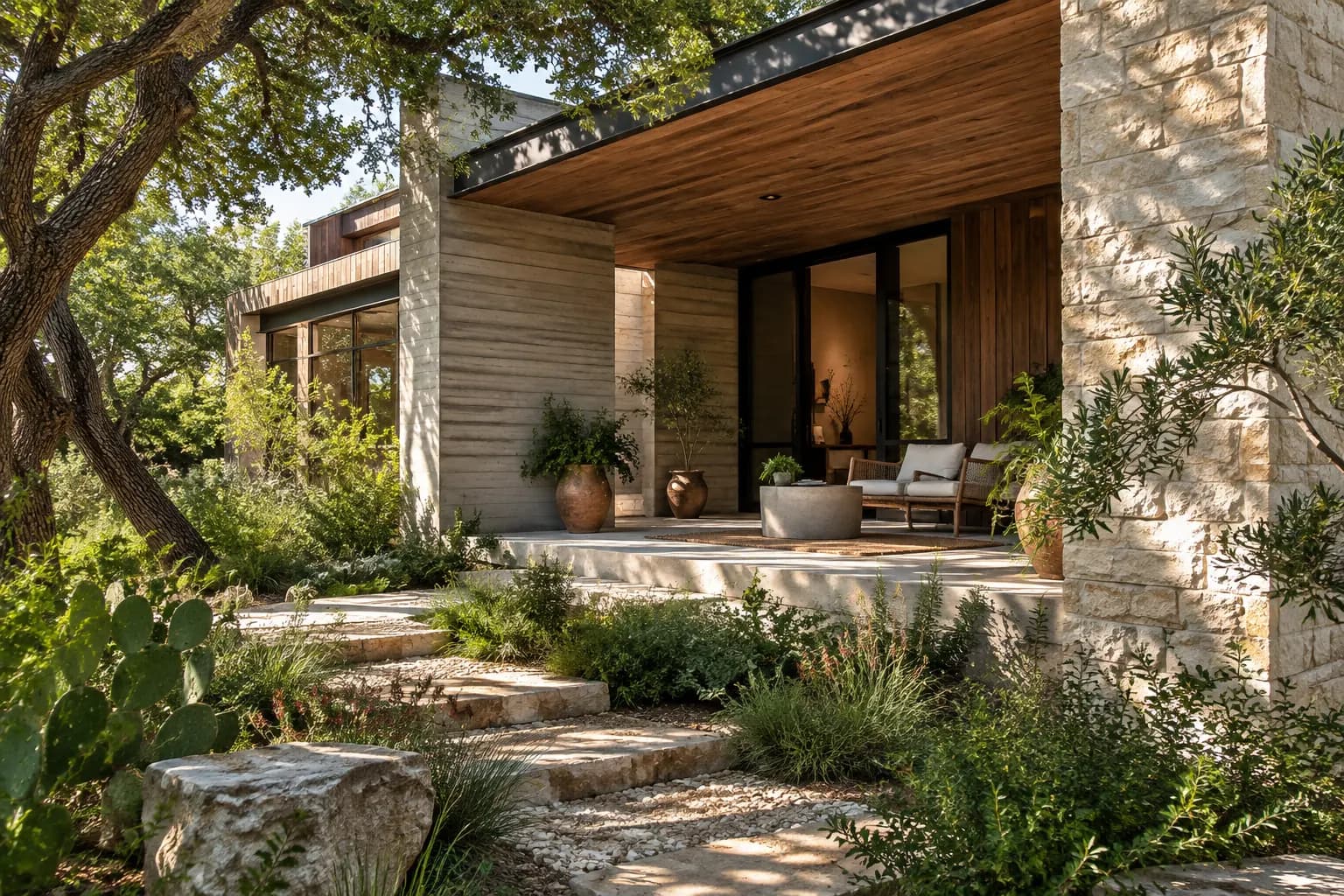
Austin threshold study · not a real property · AI-generated architectural concept
Begin at the threshold.
Before studying the floor plan, spend a moment where the house meets the ground. A porch, a small court or a covered step can tell you how a building invites people in. Notice whether that space feels usable, and what it connects to on either side.
Look for the ordinary view.
A dramatic wall of glass can be memorable. So can a carefully placed window at the kitchen sink. Look at the views you would encounter during an ordinary day, then consider privacy, glare and what changes when the trees lose leaves. These are questions to explore in person, not conclusions to draw from a photograph.
Make shade part of the visit.
Stand in the outdoor spaces you expect to use. Visit at more than one time if possible. Ask how the owners use those spaces through the year, and distinguish their experience from what you can independently verify. For changes to trees or structures, consult the relevant rules and qualified professionals.
Let the land ask a few questions.
Slope, drainage, planting and access all belong in a property conversation. An appealing landscape is not evidence that those matters have been resolved. Ask for available documentation and professional assessment where needed. The goal is to understand how the building and its site work together.
Original editorial draft, pending approval. No David Eimer authorship is asserted. General reading is not a substitute for property-specific investigation.
Bring your questions